
In or Out?

I was Raised Right, in the capital letter sense of those words, in the American South. I know that a bereavement requires a casserole, Wednesday nights belong to church as surely as Sunday mornings do, and that “Bless your heart,” deployed correctly, is a devastating takedown. Women from this world are taught to never lose our temper. Especially with our men. Instead, we say, “I’m not mad, I’m just ____” and this blank can be filled by “disappointed,” “hurt,” or “thinking,” depending on the level of our actual fury. We are nice. Even when we are not nice, it’s very important that we appear nice. We have all seen what happens to women who lose their tempers. Bless their hearts.
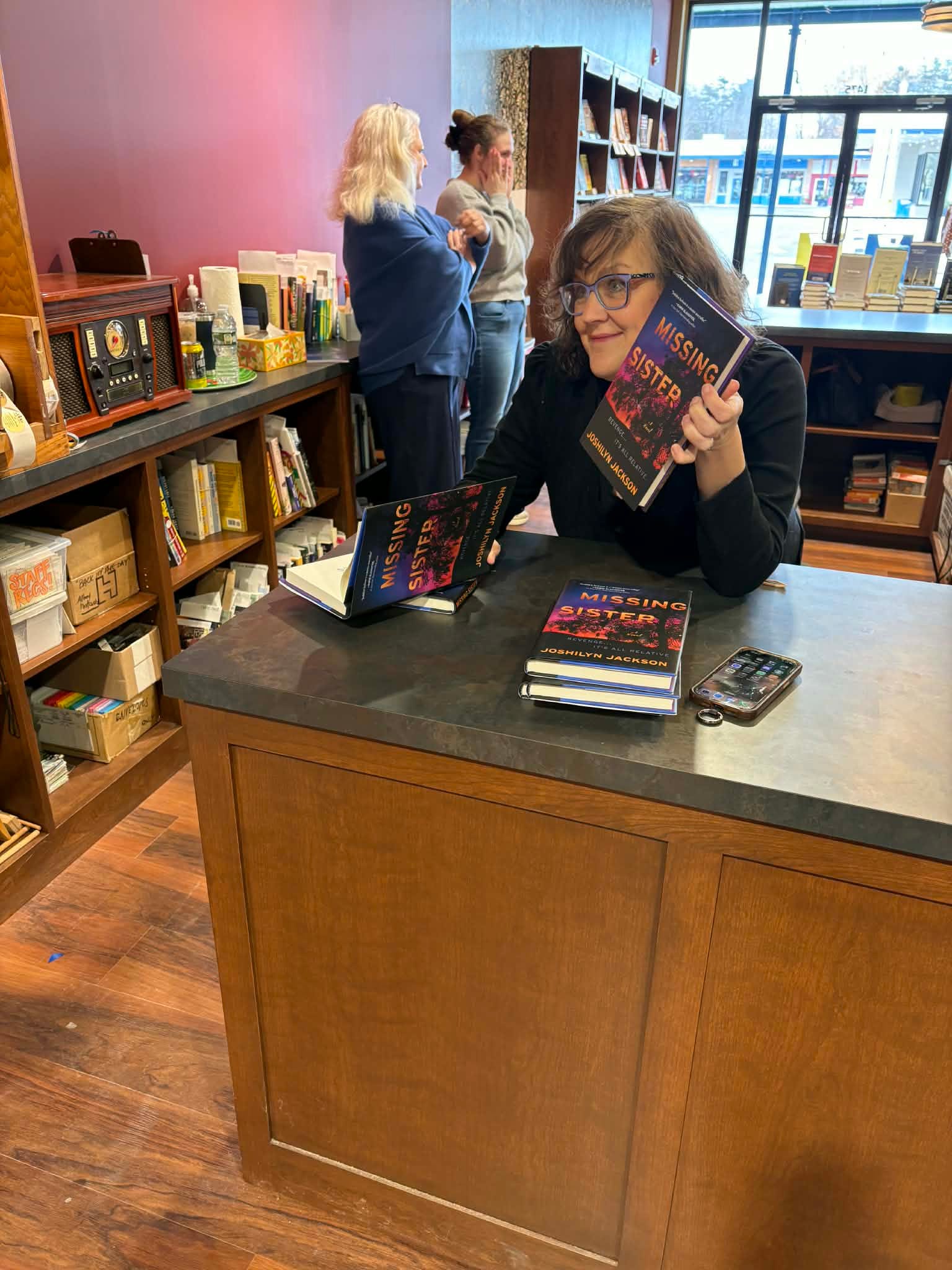
So where did Thalia Gray come from? She strolls into chapter two of my new book (MISSING SISTER, out TODAY, oh my Beloveds) with a box cutter and a dark agenda, and I’ve been trying not to write about her for more than fifteen years.
Thalia’s name changed as she tried to worm her way into my books, but her history and, uh, personality never did. She was a shadow-soaked, knife-wielding Fury (in the Greek sense) who haunted my peripheral vision every time I faced the blank page, readying to start a new novel. She wanted in, or so it felt to me. She was insistent, but she never seemed to fit into the network of “humans I love” + “a sense of place” + “a breakneck series of perilous events” that are the fabric of my novels. Twice I let her get in close enough to begin writing from her point of view, and twice I stopped and picked a different project. She stepped back, went instantly invisible, but I could hear her breathing. She never truly went away.
She didn’t fit into my worldview. I am — for all the murder and evil I have put into my books from day one — an optimist. While I have never promised readers that kind of happy ending that feels tidy and safe, I have always delivered a hopeful one; I end in what I call, “the breath,” that pause we sometimes get between shit storms. I love people. I think we are all capable of goodness. I write main characters who make morally questionable choices, sure, and I have written unreliable main characters, too, but I have never written a true anti-hero. If I am going to spend a hundred thousand words inhabiting a person, trying to live into their decisions and their ideals—well, Thalia is a lot. I find her fascinating, but thorny and uncomfortable. She is actively dangerous, and her moral compass points reliably toward “expedient.”
I have seen avatars of her appear in other books I’ve written. Paula Vauss from THE OPPOSITE OF EVERYONE has some Thalia in her warp and weave. I got closest in THE ALMOST SISTERS, where my comic book artist narrator, Leia Birch Briggs, is writing a graphic novel called Violence in Violet.
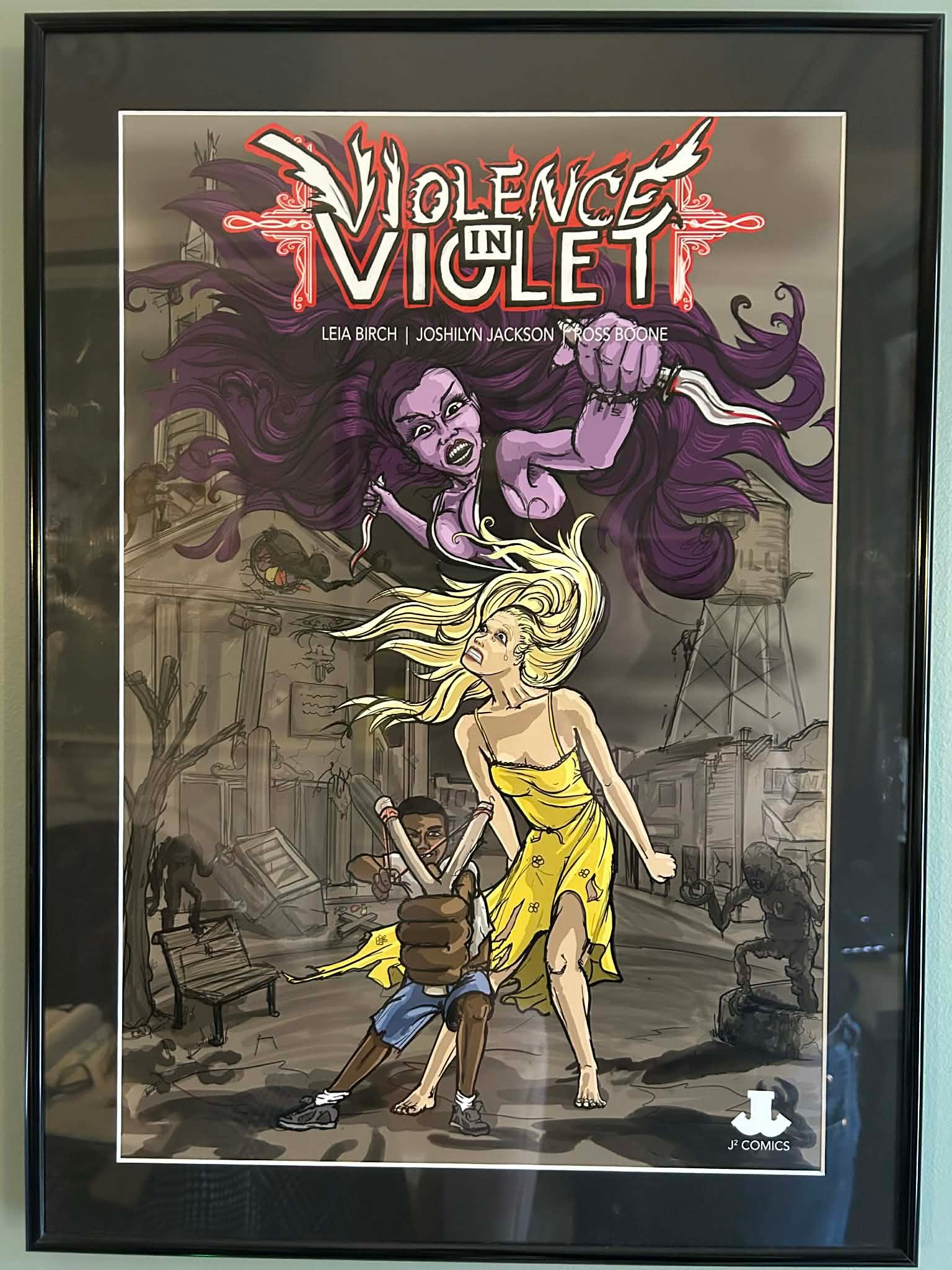
Violence is a vigilante anti-hero with purple skin and knives. There is a lot of Thalia in Violence, and in order to be comfortable writing her, I tucked her into a fictional work being written inside another fictional work by a fictional character who is definitely not me. If you find Violence problematic—and who wouldn’t?! Take it up with Leia.
Me? I write about motherhood. I write about redemption. Not all of my main characters are that commercial kind of “likeable,” but they are complex and interesting, and I like them. I don’t like Thalia. I don’t want to have dinner with her. I don’t want her near my children or my cutlery. I don’t want to think about her when I say in book talks, as I so often do, “None of my characters are me, but they are all mine.”
I’m not Penny, the likeable narrator who anchors Missing Sister. She’s a wounded girl who lost her twin five years ago to the opioid epidemic, and who is trying to fix the broken world that killed her sister by becoming a cop; I see in her my sorrow over how hard life can be. I recognize my own motherhood in her relationship with her teenaged, motherless niece. I like Penny. I think she would be a good hang. I respect her strong moral compass; she makes some questionable to very bad choices in the novel, but when she is doing wrong, she owns it. When she hurts people, she owns that, too, and she is sorry, and she does what she can to make it right. When people she loves are vulnerable, she is a safe place. She is funny, and warm, and observant, and smart. She is probably a better person than I am, which makes it flattering and great to see bits of myself in her.
I don’t want to see bits of myself in Thalia, but when it finally came time to write her, when I finally had in Penny a narrator whose light could balance her dark and a plot that required Thalia’s skill set and her history, I had to face the truth:
I am not disappointed. I am not hurt. I am not “just thinking,” Best Beloveds. I am mad, and I am not alone. If there is a male loneliness epidemic, it is equal to and opposed by a female rage epidemic. We are tired of a lot of ways the world is, and now there are mutters of “Why did we let them vote and have credit cards, remind me?” Sir! Has the very simple answer, “Because women are people,” escaped you? We are people. We should get paid fairly for our work, believed about our grievances, our accomplishments shouldn’t be a joke, and our interests shouldn’t be belittled.
I remember watching all those reels from the Eras tour on Instagram and when Taylor Swift added The Tortured Poets Department Section (fondly called, “Female Rage, the Musical”) and came screaming into the void on her Roomba of Vengeance, something sparked in me.
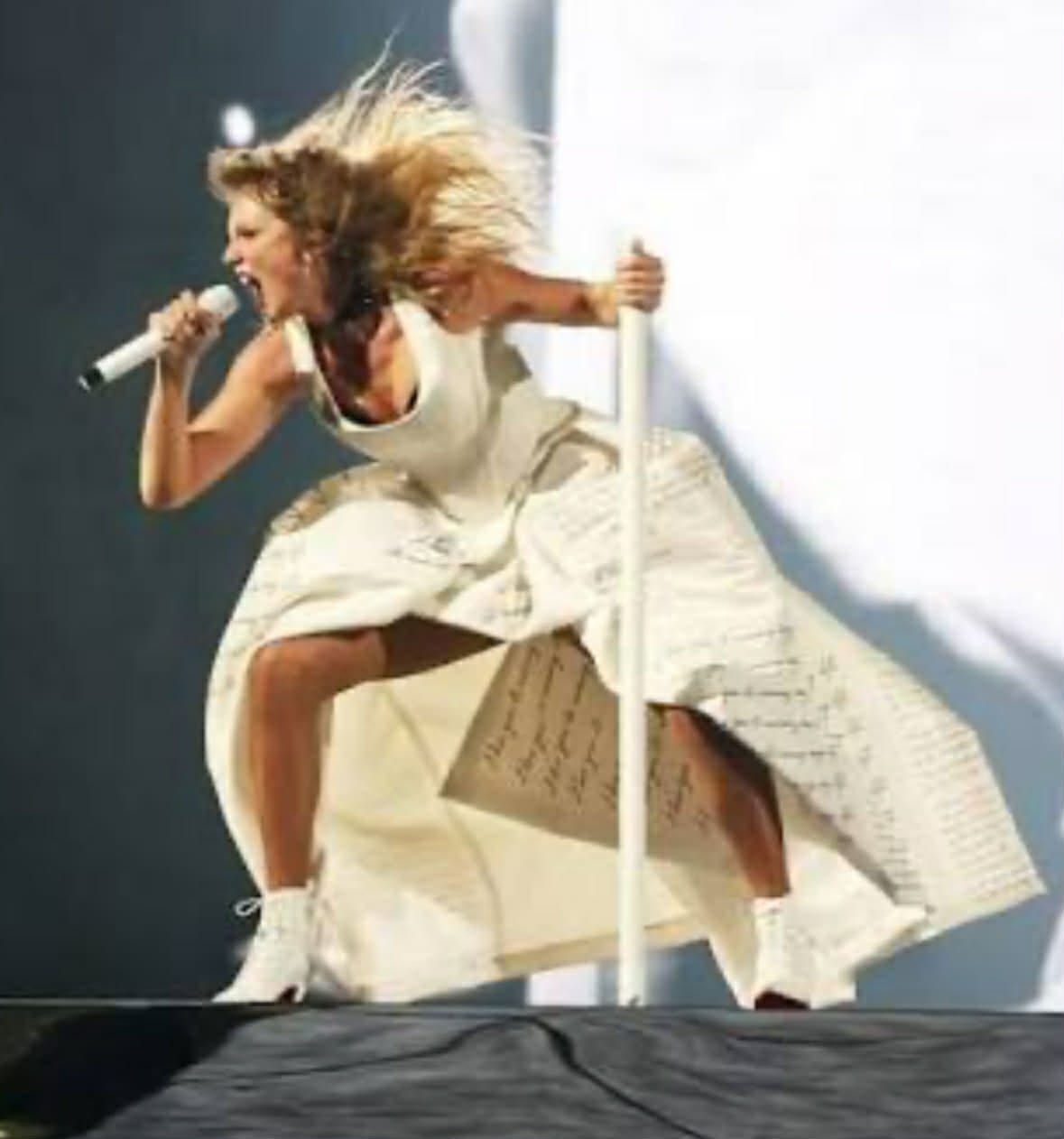
“That’s Thalia,” I told Scott. I started seeing Thalia in other places, coming closer and closer as I wrote, larger than life and darker than midnight, constructed almost entirely from my own unmusical Female Rage that I have accumulated simply by navigating the world as a human woman raised to smile, deflect, retreat, and keep everybody comfortable.
I hope you read Missing Sister. You are going to like Penny, Beloveds, I promise you. I adore her, and the sweet, equally bereaved and angry guy she might be falling for (it’s complicated), and her wild niece Shadow, and her steel-spined, quiet mom, and her gentle, dog-rescueing dad, and her darling, feckless, Himbo brother. I see myself in all of them, to some degree, and I think you will see bits of yourself in this one or that one, too.
But Thalia? She isn’t me and she surely isn’t you, Beloveds. We will not have dinner with her.
But.
If you have ever lifted your hands to heaven and cried over the injustice of the world, then maybe you will spark to her, as I have. Maybe it will feel good to know that she is loose and doing all the things we cannot do because of our good moral compasses, and because we truly believe that we can make the world better with love and grace and kindness and speaking out instead of knives. Thalia is a vigilante for the optimists, me included, us folks who love people but are getting angrier and angrier as we look at the world around us. She is for those of us who are ready to admit that by writing her or reading her, we are not letting something in. She is there. She is in us. She is the avatar of all our righteous anger, doing things that no one should ever have to do. Things that I am not going to do. Things I like to think I am not capable of doing.
Not gonna lie, though. On paper? It felt really good to let her out.
I can totally see Thalia being a rallying cry. I love your characters, even Thalia. I need more Penny and Thalia adventures, and their revenge on the Bird Man.
You have a gift in how you craft your words. Thank you for sharing them with us.
I may not BE Thalia, but there are times . . . thinking of where and at whom I'd direct her fury if I could. Wonderful, cathartic book <3